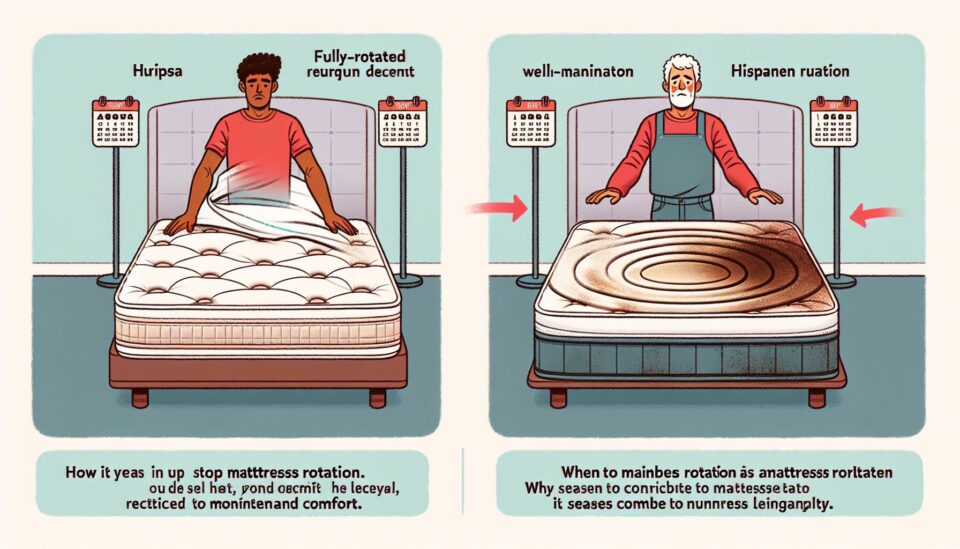
Mattress rotation plays an essential role in maintaining comfort and prolonging the lifespan of your mattress. Consistent rotation helps to evenly distribute wear, sustains a level surface, and prevents the creation of body impressions, enhancing the overall quality of your sleep. However, there comes a point when rotating your mattress stops offering these benefits.
Understanding the Importance of Mattress Rotation
Rotating your mattress involves turning it 180 degrees, so the portion that was at the head of your bed now rests at the foot. This action aims to distribute the pressure exerted on the mattress when you use it.
Over time, lying in the same position each night can cause a mattress to sag or create body impressions, which can affect the comfort and support of the mattress. By rotating it regularly, you ensure that the entire mattress surface is used evenly, preventing such issues. Not only does this maximize the comfort and durability of your mattress, but it also allows for better sleep quality due to the maintained even surface.
The Regularity of Mattress Rotation
Rotating a mattress every three to six months can significantly enhance its lifespan. Environmental factors play a part in the regularity of rotation. For instance, the need for rotation might be frequent in regions with high temperatures, as the heat might cause the mattress materials to lose their shape and support more quickly. According to field observations, structural factors such as the number of people using the mattress and the weight of individuals also influence the regularity of rotation.
When Mattress Rotation Stops Helping
Though mattress rotation helps prolong its lifespan and maintain comfort, it is not a permanent solution for all mattress-related issues. After years of usage, a mattress eventually reaches a point where it might have irreversible wear and tear, and rotating it no longer helps. Mattresses typically have a lifespan between 7 to 10 years. After this period, common issues like sagging or the formation of body impressions become persistent despite regular rotation.
In some instances, depending on the quality and type of mattress, signs of persistent sagging or discomfort may appear earlier. When a mattress shows signs of sagging or other structural problems, rotation will not rectify these issues. At this point, it's probably time to consider replacing your mattress.
Common Misconceptions Around Mattress Rotation
Some people believe that flipping the mattress - changing the side that you sleep upon - provides the same benefits as rotation. However, this is not always true. Many mattresses are not meant to be flipped. These are usually one-sided or 'no-turn' mattresses built with specific layers constructed in a particular order for optimum comfort. Flipping these mattresses can damage their design and overall comfort level.
Conclusion
While mattress rotation offers numerous benefits such as even wear distribution, sustained comfort levels, and increased lifespan, it is not a permanent solution. Once a mattress reaches a certain age or exhibits irreversible signs such as persistent sagging, rotation will not help. In such cases, replacing the mattress might be the best course of action. Understanding the role of rotation and recognizing when it stops helping can greatly contribute to extending your mattress's lifespan and ensuring a good night's sleep.