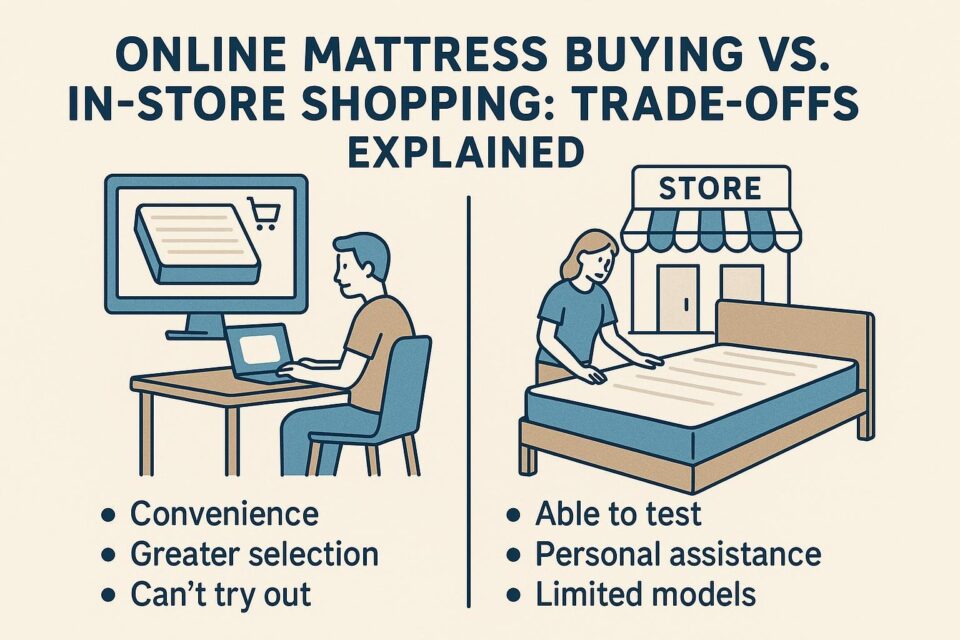
Buying a mattress involves a decision that many people face in Ontario and surrounding regions. The choice between online mattress buying and in-store shopping often reflects different priorities, habits, and expectations. Both methods carry distinct trade-offs influenced by local housing types, climate, and consumer behavior. This article explores these differences by clarifying practical aspects and common patterns seen in mattress shopping.
Experience and Inspection
In-store shopping allows customers to physically test mattresses. Shoppers can lie down, feel firmness levels, and assess support. This tactile experience usually helps some individuals better understand how a mattress reacts to their body. In regions like Toronto or Ottawa, where seasonal temperature and humidity fluctuate, people may also check mattress breathability and material comfort firsthand.
Online mattress buying removes this immediate physical inspection. Customers rely on product descriptions, photos, videos, and user reviews. This lack of direct contact means buyers must trust how well the website conveys material characteristics like foam density or spring type. For many, this can feel uncertain or incomplete, especially for those with specific comfort needs.
Convenience and Timing
One of the common appeals of online mattress purchasing is convenience. Buyers can browse products at any hour, compare different models, and place orders without leaving home. This feature can matter in suburban areas of Ontario where retail locations may be farther apart or require travel. Additionally, online orders may arrive directly to the buyer’s home, which reduces the need to transport a large and bulky item.
In-store shopping requires visiting physical locations during business hours. This involves more time commitment and planning. People in urban settings such as Hamilton or Kingston might experience easier access to mattress retailers, but this is not uniform across all regions. The effort to visit a store can deter some shoppers, especially when weather conditions are harsh in winter months.
Return Policies and Trial Periods
Return policies affect mattress purchasing experiences differently for online and store buyers. Many online mattress companies offer trial periods, often ranging from 90 to 120 days. This allows buyers to test the mattress at home and return it if unsatisfactory. These policies recognize that comfort is highly personal and may change after extended use. However, returning a mattress can involve repackaging and arranging shipment, which some buyers find complicated.
In-store returns tend to be more immediate but may come with stricter conditions. Stores might allow exchanges or returns only within a limited return window or if the mattress shows no damage. This makes some buyers hesitant to commit to an in-store purchase without extended testing at home. Return arrangements can also depend on store policy variations typical of different Ontario municipalities.
Price Comparison and Cost Factors
Online mattress models often come with lower listed prices. This is partly because online sellers often bypass some overhead costs like rent and sales staff salaries. Discounts and promotions tend to reflect this difference. Buyers in the Greater Toronto Area or Ottawa might notice these apparent savings.
However, online orders can have additional expenses such as delivery fees, taxes based on the final destination, or costs related to returning a mattress. In-store prices may appear higher but sometimes include free delivery or setup services. The total cost comparison can vary depending on local factors and retailer terms.
Mattress Variety and Information Access
Shopping online offers access to a wider variety of mattress brands and models. Many small or direct-to-consumer brands operate solely online, making their products less visible in physical stores. Buyers in smaller Ontario towns might find this appealing due to limited local retail options.
On the other hand, in-store displays allow buyers to see multiple mattress options side by side. Staff in stores can explain materials and features in person, although this also varies by retailer expertise. Online shoppers rely on product specifications and third-party reviews to gather knowledge, which can sometimes be overwhelming or inconsistent.
Seasonal Patterns and Consumer Behavior
Shopping habits for mattresses show some seasonal trends in Ontario. For instance, in-store shopping often increases around holiday sales or long weekends, as these are common times for promotions. Online mattress interest tends to rise during colder months when people prefer shopping indoors or at home.
Housing styles impact mattress choices. Older homes with narrow stairways or limited elevator access may encourage buyers to choose mattresses that compress for easier delivery, often sold online. Newer, suburban homes with spacious interiors might make traditional mattress delivery and setup simpler, making in-store purchases more convenient.
Environmental and Structural Considerations
Mattress delivery logistics interact with local infrastructure. In dense urban locations like Toronto or Mississauga, navigating delivery trucks through busy streets or apartment buildings can add complications. Online mattress packs, often compressed and rolled, fit easily through hallways and doors, which suits these environments.
In contrast, mattresses purchased in stores might arrive fully assembled or less compressed. For Ontario's seasonal weather patterns, timing delivery during dry, mild periods helps avoid damage. Both online and in-store buyers face challenges if they live in buildings with strict move-in protocols or limited delivery schedules.
Common Misconceptions
A few common misunderstandings exist about online and in-store mattress shopping. Some people assume online mattresses are always cheaper, but adding shipping and return costs might offset initial savings. Others believe in-store shopping guarantees higher quality, but online brands vary widely in material and build quality.
It is often assumed that testing a mattress only requires a few minutes in the store. Field observations suggest that brief trials do not always reflect real-use comfort, which explains why many brands include trial periods, even when bought in person through some retailers.
Why Problems and Recalls Happen
Mattress issues, such as premature sagging or off-gassing smells, occur regardless of the purchase method. These problems often stem from manufacturing defects, storage conditions, or improper support bases. Neither online nor in-store purchases guarantee immunity from such problems.
Ontario regulations require retailers to comply with safety standards, including fire resistance and labeling. These rules apply equally to mattresses sold online or offline. Buyers should recognize that recalls or safety notices affect broad product categories and are not linked to the place of purchase alone.
Summary of Trade-offs
| Aspect | Online Buying | In-Store Shopping |
|----------------------|---------------------------------------------------------|-------------------------------------------------------|
| Physical Testing | Not possible before purchase | Immediate tactile testing possible |
| Convenience | High; shopping anytime, home delivery | Limited to store hours and location |
| Return and Trial | Extended trial periods, but complex returns | Shorter return windows, possible immediate exchange |
| Price | Often lower list price, extra delivery/return costs | Higher price, might include delivery and setup |
| Product Variety | Wide and diverse brands, some exclusive online | Limited to store inventory and brands |
| Logistic Ease | Often easier to deliver compressed mattresses | Full-size delivery may be challenging in urban areas |
Conclusion
The decision between online mattress buying and in-store shopping involves many factors. Ontario's varied housing stock and climate affect convenience and shipping, while personal comfort preferences influence how buyers value testing. Both options carry distinct advantages and limitations.
Observations show that no single approach is ideal for everyone. Online mattress buyers gain from convenience and variety but give up physical testing. In-store shoppers gain immediate interaction but sacrifice some flexibility and product range. Understanding these trade-offs helps explain ongoing trends and personal buyer choices in mattress purchasing within the region.