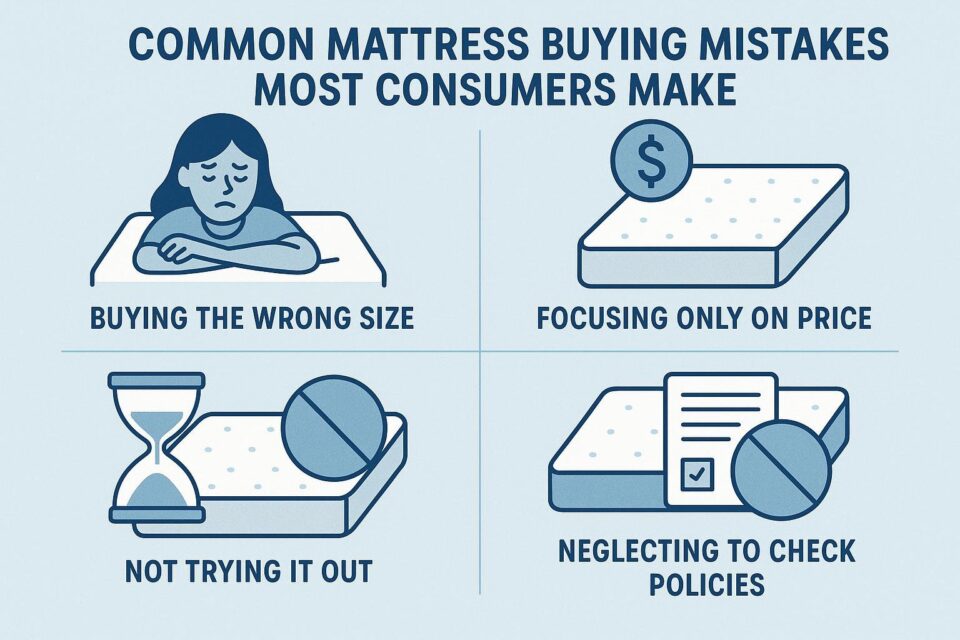
Buying a mattress often seems simple but can include multiple challenges. Many consumers face difficulties because of common misunderstandings or overlooked details. This article explains frequent mattress buying mistakes and the reasons behind them. The focus is on clear facts and explanations, especially for buyers in Ontario’s varied housing and climate conditions.
Ignoring Local Climate Effects on Mattress Comfort
Ontario experiences wide temperature swings between seasons. Consumers may not consider how this affects mattress comfort. Some mattress materials react differently to humidity and temperature changes, causing stiffness or sagging over time. For instance, memory foam can feel firmer in colder months and softer in summer. Ignoring these factors may lead to discomfort at certain times of year.
Many homes in Ontario have older heating and cooling systems or lack central air-conditioning, particularly in older urban buildings. This affects indoor temperature regulation and, by extension, mattress performance. Selecting a mattress without considering local climate impact often results in a poor sleep experience.
Overlooking Housing Type and Bedroom Layout
Ontario’s housing stock varies from modern suburban houses to older apartment buildings and heritage homes in cities like Toronto or Ottawa. Bedroom sizes and floor plans differ significantly. Some rooms in older buildings have limited space, sloped ceilings, or uneven floors.
Buying a mattress based solely on personal preference without measuring the bedroom or considering the available space is a common error. A mattress that fits well in one home may not suit another. For example, large mattresses may be difficult to maneuver in narrow stairwells common in older homes. This oversight often leads to inconvenience during delivery or setup.
Relying Too Much on Price Alone
Price often guides mattress choices. Many shoppers associate higher price with better quality or durability. In Ontario, mattress prices vary widely due to brand, material, and specialty features. However, price alone rarely reflects the mattress’s suitability for one's needs or local living conditions.
Some expensive mattresses may not perform well in humid areas or small apartments. Similarly, very low-cost mattresses might lack adequate support or durability. Focusing heavily on price without examining mattress construction or the sleep environment can result in early wear or discomfort.
Misunderstanding Mattress Support and Firmness
Consumers often mistake firmness for support. Firmness describes how hard or soft the mattress feels, whereas support refers to how well the mattress maintains spine alignment. Many Ontario buyers favor a softer mattress, believing it feels more comfortable. However, in homes with older bedsprings or uneven flooring, a softer mattress may sag faster, leading to poor posture.
An unsuitable mattress firmness can worsen existing back pain or cause new discomfort. The difference between support and firmness often remains unclear to buyers, increasing the risk of a poor purchase.
Ignoring Mattress Durability and Lifespan
Mattress durability depends on materials, construction, and usage patterns. In Ontario, environmental factors like humidity and temperature swings may accelerate material breakdown. Despite this, many buyers do not research mattress lifespan or consider local conditions that can affect wear.
A mattress chosen without regard to durability metrics or warranty terms might require earlier replacement. This creates additional costs and waste. For example, foam mattresses exposed to frequent moisture may develop mold or odors faster in poorly ventilated rooms common in some older Ontario homes.
Overlooking Allergen and Health Considerations
Indoor allergens such as dust mites, mold, and pet dander often cause problems in Ontario homes, especially in humid summers. Many consumers forget to check if the mattress includes hypoallergenic or dust-resistant features. Neglecting these traits can worsen allergy symptoms or respiratory issues.
Some mattress materials trap allergens more easily than others. Additionally, older buildings may have limited ventilation, increasing allergen buildup. Ignoring these health-related factors often affects sleep quality and overall wellbeing over time.
Misinterpreting Trial Periods and Return Policies
Many mattress brands offer trial periods and return policies. Consumers sometimes misunderstand or overlook the specific terms. For example, trial lengths can vary, and some urban deliveries in Ontario have restricted return options due to elevator size or building rules.
Moreover, return policies might require the mattress to remain in original packaging or not show signs of use. Buyers often misjudge these conditions, resulting in denied returns or exchanges. This misunderstanding can cause unnecessary expense and frustration.
Overvaluing Brand Names Over Material Quality
Brand recognition affects many mattress buyers. Shoppers may choose a brand without studying the mattress’s material or construction quality. In Ontario, brand popularity does not always guarantee suitability for local living conditions or personal preferences.
Some well-known brands may have mattresses that perform poorly under humid conditions or lose shape quickly. Small or lesser-known brands might offer products better matched to specific needs but receive less attention due to limited marketing. Overvaluing brand names alone overshadows important buying criteria.
Neglecting to Test the Mattress in Person
Many buyers rely exclusively on online descriptions or reviews. Although these resources provide useful information, they cannot replace a physical trial. This issue is notable in urban Ontario where some mattress stores are scarce or located far from residential areas.
Testing a mattress in person helps evaluate firmness, support, and comfort aligned with individual sleep habits. Without this step, buyers risk selecting a mattress that feels good on paper but does not deliver restful sleep. Skipping in-store trials also omits evaluation of edge support and motion transfer, important for shared beds.
Confusing Mattress Size with Room Functionality
Mattress sizes range from twin to king and beyond. Consumers often choose larger sizes assuming they improve comfort. In many Ontario homes, especially apartments and semi-detached houses with smaller bedrooms, large mattresses occupy most room space.
Buying too large a mattress can restrict movement, reduce furniture placement options, and create cramped sleeping quarters. This mistake can lead to sleep disruption and reduced bedroom usability. Proper alignment between mattress size and room dimensions is essential.
Failing to Consider Sleeping Position
Different sleep positions require varied mattress support and firmness levels. Side sleepers need cushioning for shoulders and hips, while back and stomach sleepers benefit from more firmness. Some consumers do not consider this when purchasing.
In Ontario, seasonal sleep pattern changes may influence preferred position. For example, colder winters encourage indoor rest in certain postures, making mattress choice even more relevant. Ignoring sleeping position leads to discomfort and disturbed sleep.
Not Accounting for Partner Needs
When two people share a bed, preferences for firmness, temperature regulation, and motion isolation can differ. Many buyers focus on their own needs and ignore those of their partner. This oversight can cause sleep disturbances or dissatisfaction.
Ontario couples often face this challenge due to limited bedroom size or mattress options in local stores. Mattresses that do not balance partner needs frequently result in restless nights or a search for replacements sooner than expected.
Summary of Common Mistakes
- Ignoring effects of Ontario’s climate on mattress comfort.
- Not considering housing type, bedroom layout, and size.
- Choosing based on price without understanding features.
- Confusing support and firmness terms.
- Overlooking durability relative to environmental conditions.
- Missing allergen control relevant to humid indoor air.
- Misunderstanding trial periods and return policies.
- Overvaluing brand names over actual mattress quality.
- Skipping in-person mattress testing.
- Selecting mattress size without checking room functionality.
- Disregarding specific sleeping positions.
- Neglecting partner preferences in shared beds.
Understanding these points helps explain why many consumers end up dissatisfied with their mattress purchase or face premature replacement. Awareness of local factors