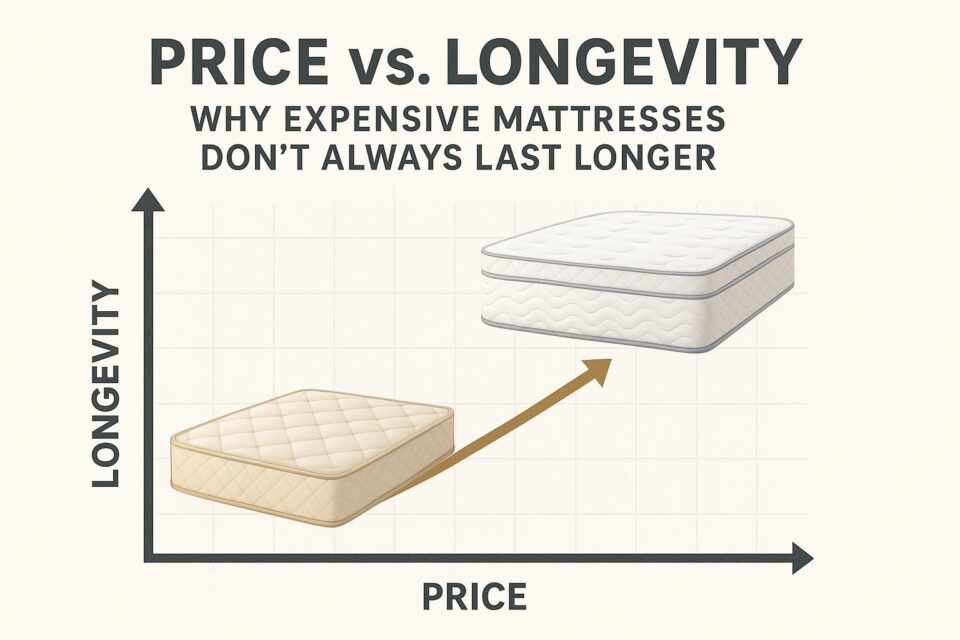
Many people assume a higher price means better durability when buying a mattress. They often believe that expensive mattresses will last longer than cheaper ones. However, this is not always true. Price and longevity do not show a straightforward connection. Various factors influence how long a mattress lasts, and cost is only one of them.
How Mattress Longevity Works
A mattress’s lifespan depends on materials, construction, usage, and maintenance. These elements affect its ability to keep shape and support over time. Generally, most mattresses last 7 to 10 years. Some may last less if used heavily or without proper care. Others last longer if built with lasting materials and used lightly.
Expensive mattresses sometimes use advanced materials like memory foam, latex, or hybrid layers. These materials can offer good comfort. However, they do not always guarantee longer lifespan. Some materials wear faster despite their initial quality. For example, memory foam can break down quicker under heavy weight or heat. The price tag may reflect comfort features rather than durability.
Material Quality vs. Price
Not all mattress materials age equally. High-density foam and natural latex tend to last longer than low-density foam or cheaper innerspring coils. Yet, some expensive mattresses use layered foams with different densities. The softer top layers provide comfort but may compress faster. This compression leads to sagging over time.
Meanwhile, a moderately priced mattress with durable innerspring coils and a firm top layer can hold support longer. Price may include brand reputation, marketing, and retail markup. These factors do not improve the mattress’s physical resistance to wear and tear.
In Ontario’s climate, which experiences cold winters and humid summers, certain foams can break down or retain moisture, promoting quicker deterioration. These environmental factors affect mattress life independently of price.
Mattress Construction and Design
The way a mattress is built also affects lifespan. Some beds have zoned support systems or reinforced edges, which help reduce sagging and body impressions. Expensive mattresses often emphasize these features but not always effectively.
In older and mid-century homes around Toronto, many bedrooms have typical platform beds or box springs. These supports influence mattress wear. A mattress on insufficient support may wear out faster regardless of cost. Even the best mattresses can degrade unevenly if the foundation is weak or uneven.
Changes in humidity and temperature within Ontario homes also play a part. Swings from cold to warm conditions can cause materials inside mattresses to expand and contract. This process may speed up degradation, especially in cheaper materials. High price points do not guarantee resistance to these local climate stresses.
Usage Patterns Affect Longevity
User habits strongly affect mattress wear. Heavy body weight, sleeping position, and movement during sleep can hasten mattress breakdown. For example, side sleepers may cause more pressure points on the mattress surface, creating impressions over time.
Households with children or pets in Ontario often see quicker mattress wear. Pets jumping or sleeping on the bed, combined with possible moisture and dirt, degrade mattress fabric and foam faster.
Sometimes expensive mattresses feature soft surface layers that feel plush initially but compress quickly under frequent use. Cheaper mattresses with firmer constructions might perform better under such conditions. Thus, price does not reliably predict lifespan under daily routine stresses.
Common Misconceptions About Mattress Price and Life
One misconception is that expensive mattresses include higher-quality materials by default. While this can be true, the overall design and material combinations matter more for durability. A complex multi-layer foam mattress may feel luxurious but can break down faster than a simple high-resilience foam mattress.
Another misunderstanding is that warranty length matches expected lifespan. Warranties often cover defects rather than natural wear. A mattress might lose comfort or support before warranty runs out, especially if heavily used or poorly maintained.
Some buyers think high prices reflect extensive testing or stricter quality control. This varies widely between brands and manufacturing plants. Overseas production and brand prestige sometimes add cost without guaranteeing higher build quality.
Pros and Cons of Expensive Mattresses
Pros:
- Often use advanced comfort technologies.
- May offer better initial support or pressure relief.
- Sometimes include features such as cooling gel or hypoallergenic covers.
Cons:
- Price may not reflect durability.
- Complex foam layers can deteriorate faster under heat or weight.
- Heavy materials may trap moisture in humid climates.
- Higher cost adds marketing and brand fees, not longevity.
Pros and Cons of Cheaper or Mid-Range Mattresses
Pros:
- Simpler designs mean fewer weak points.
- High-resilience foam or traditional coils can last well.
- Often lighter, easier to move and rotate.
- May resist moisture better if made with natural fibers.
Cons:
- May lack comfort technology or special features.
- Less plush or adaptive feel.
- Some cheap mattresses use low-density foam that breaks down quickly.
Toronto’s Housing and Weather Impact on Mattress Life
Toronto’s blend of older and newer homes means mattresses experience a range of support types and indoor climates. Older buildings with less efficient insulation often have higher indoor humidity in summer and dry air in winter. These conditions affect mattress materials unevenly.
City apartments with central air conditioning may reduce moisture damage but increase dryness that can lead to material brittleness. Suburban homes heated by natural gas may have more gradual temperature shifts, reducing stress on mattress foams.
Urban living also exposes mattresses to pollution and dirt. Frequent cleaning and mattress cover use help prolong life but do not depend on mattress price.
How Consumers Can Understand Mattress Longevity
Consumers often rely on price as a shortcut to quality and durability. Observations from Ontario show this can mislead expectations. It helps to understand mattress materials and design clearly.
Choosing a mattress for longevity involves examining density, support system, and user conditions more than just price. Aging signs like sagging, body impressions, or loss of support often appear regardless of cost.
Regional climate and home conditions should factor into durability expectations. For example, a memory foam mattress may wear faster in a basement apartment with high humidity.
Summary
Expensive mattresses do not always last longer than lower-priced options. Longevity depends on materials, construction, use, support, and environment. Price often reflects comfort features, brand, and marketing rather than durability.
In Toronto and similar Ontario areas, climate and housing type influence mattress wear. Buyers relying solely on price may find their mattress does not meet lifespan expectations.
Understanding these factors helps clarify why cost alone is not a reliable indicator of mattress longevity. This knowledge supports more realistic expectations and planning for mattress replacement without assuming price equals durability.