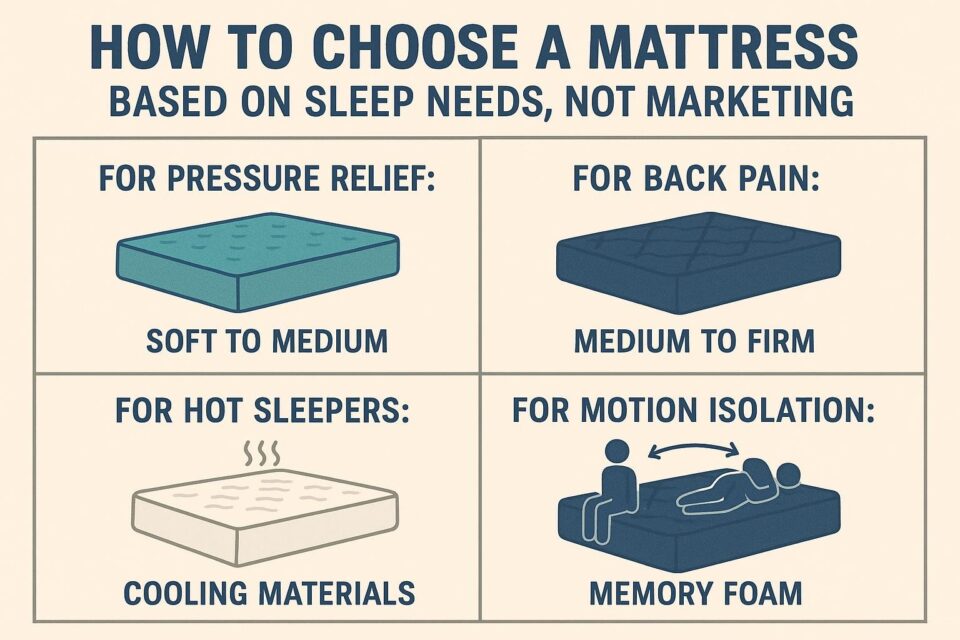
People often face challenges while selecting a mattress. Mattress advertisements use creative language, attractive images, and promises about comfort and health benefits. However, marketing rarely reflects individual sleep needs accurately. This article explains how to choose a mattress by understanding personal sleep requirements rather than trusting promotional claims.
Understanding Sleep Positions and Mattress Support
A person's sleep position affects mattress choice significantly. The three common positions are back sleeping, side sleeping, and stomach sleeping. Each position applies pressure on different parts of the body and requires different mattress support.
- Back Sleepers: They need medium-firm support to maintain a natural spinal curve. A mattress too soft may cause the lower back to sink. A mattress too firm can create pressure points.
- Side Sleepers: They require a softer surface to relieve pressure on shoulders and hips. Firm mattresses can cause discomfort in these areas.
- Stomach Sleepers: They often prefer firm mattresses to keep hips aligned with the spine and prevent sagging.
Understanding your dominant sleep position helps narrow down mattress firmness options that fit your body’s needs.
Body Weight and Mattress Firmness
Body weight changes pressure on the mattress surface. Lightweight sleepers may find firm mattresses uncomfortable because they do not compress enough, leading to pressure points. Heavier individuals often need firmer mattresses for proper support and durability.
- Under 130 pounds (59 kg): Softer mattresses can work well as they provide contouring without excess sinkage.
- 130 to 230 pounds (59 to 104 kg): Medium-firm mattresses tend to balance comfort and support.
- Above 230 pounds (104 kg): Firmer, thicker mattresses generally prevent excessive compression and sagging.
Body weight influences not only comfort but also the lifespan of the mattress when matched with proper firmness.
Health Conditions and Mattress Choice
Different health conditions affect mattress needs. Pain, allergies, and circulation issues require specific mattress features.
- Back or Joint Pain: Mattresses with adjustable firmness or zoned support may help maintain spinal alignment.
- Allergies: Hypoallergenic mattress materials, such as latex or memory foam with antibacterial covers, reduce exposure to dust mites and allergens.
- Circulation Problems: Mattresses that promote even weight distribution help prevent pressure buildup, improving blood flow during sleep.
Understanding these conditions can clarify what mattress features matter most, irrespective of marketing emphasis on "miracle" benefits.
Material Types and Their Characteristics
Mattresses generally come in several material types: innerspring, memory foam, latex, and hybrids. Each material behaves differently under pressure and heat, and this impacts comfort and support.
- Innerspring Mattresses: Use metal coils for support. They usually offer firm support and good breathability. Older homes in Toronto with humid summers may find innerspring mattresses cooler but less contouring.
- Memory Foam Mattresses: Contour to body shape, reducing pressure points. They sometimes retain heat, which may not suit warmer climates or people prone to night sweats.
- Latex Mattresses: Offer responsiveness and natural materials. Latex is often cooler than memory foam and resists allergens, which some Ontario residents prefer.
- Hybrid Mattresses: Combine innerspring coils with foam or latex layers. They aim to balance support with comfort but vary greatly by manufacturer.
Each type presents pros and cons. Choosing one requires aligning material properties with personal sleep preferences and environmental factors like humidity and temperature common in a region.
Mattress Size and Room Space Considerations
The size of a mattress influences sleep quality. People need enough space to move freely while sleeping. However, room size limits mattress options in many urban settings like Toronto or Ottawa, where bedrooms can be compact.
- Twin and Twin XL: Suitable for single sleepers with limited room.
- Full/Double: Offers more space but may be tight for couples.
- Queen: Common for couples, balances size and cost.
- King and California King: Provide maximum space but require large bedroom areas.
Choosing a mattress size based on actual room dimensions and sleeping habits avoids discomfort caused by cramped or oversized beds.
Durability and Lifespan Influenced by Usage Patterns
The mattress lifespan depends on quality, usage, and body weight. People who sleep alone and maintain regular sleep schedules may find mattresses last longer than those sharing beds or experiencing frequent movement during sleep.
Firmness and materials also influence how long a mattress maintains support. For example, softer foam layers compress faster with daily use. Heavier sleepers exert more force, accelerating wear.
Regular wear in larger Canadian cities can also involve humidity and temperature fluctuations that affect mattress materials differently. Latex tends to resist moisture better than foam in such climates.
Common Marketing Claims and What They Mask
Mattress advertisements often use phrases like “best sleep experience,” “orthopedic support,” or “temperature regulating.” These claims may not describe the actual benefits experienced by every user.
- “Orthopedic” does not mean the mattress suits all back conditions.
- “Temperature regulating” often depends on room and body temperature, not mattress alone.
- “Best sleep experience” is highly subjective and varies by individual needs.
Marketing tends to highlight features that appeal broadly but do not guarantee personal comfort or improved sleep quality.
Why Testing Mattresses Matters
Many stores and online retailers allow limited mattress testing. Extended testing matters because initial comfort changes after a few nights as the body adapts and materials soften.
During the testing phase, people should focus on how the mattress supports spinal alignment in their preferred sleep position. Pressure points and heat retention become clearer after several hours, rather than minutes.
Regional Housing and Sleep Environment Factors
In regions like Southern Ontario, older houses may have uneven floors or less insulation. Such conditions affect mattress performance and longevity. For example:
- Uneven floors can reduce mattress uniformity, causing sagging spots.
- High humidity indoors encourages mold and dust mites, which influence hypoallergenic mattress choices.
- Seasonal climate shifts affect mattress breathability and temperature control.
Climate adaptation is an important but often overlooked factor in mattress choice that marketing rarely addresses.
Summary of Key Considerations
To choose a mattress based on sleep needs rather than marketing:
- Identify your main sleep position.
- Match mattress firmness to your weight.
- Consider health conditions affecting comfort and support.
- Understand materials and their fit for your climate.
- Measure available room space before selecting mattress size.
- Recognize the limits of marketing claims.
- Use testing time to evaluate true comfort.
- Factor in household environmental conditions that affect mattress longevity.
Choosing a mattress is complex and personal. Prioritizing sleep needs over advertising can lead to better rest, health, and mattress satisfaction.
Additional Examples of Mattress Choices
- A middle-aged side sleeper weighing 150 pounds in Toronto may prefer a medium-soft latex mattress to reduce shoulder pressure and accommodate humid summers.
- An elderly back sleeper over 230 pounds in Ottawa might benefit from a firm hybrid mattress offering spinal support and breathability during cold winters.
- A stomach sleeper living in a small urban apartment in Hamilton could choose a firm innerspring mattress sized queen for support and optimal room fit.
These examples illustrate how personal and regional factors combine to shape mattress suitability.
Pros and Cons of Popular Mattress Types
| Mattress Type | Pros | Cons |
|-----------------|--------------------------------