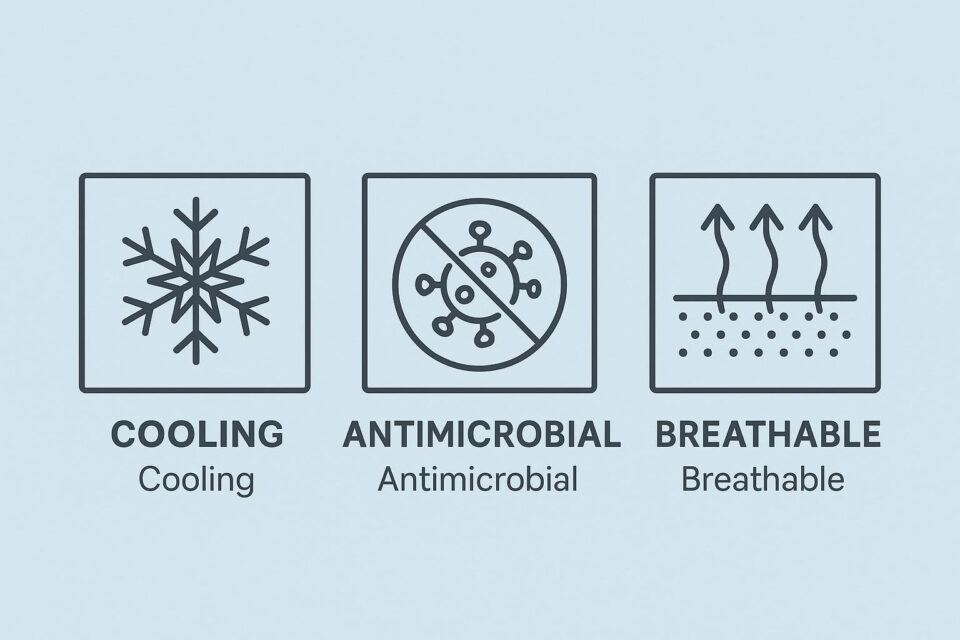
Clothing and textile products often carry labels advertising features such as "cooling," "antimicrobial," and "breathable." These terms attract attention and suggest certain benefits. However, the meanings and limits of these claims can vary widely based on material, design, and environmental factors. This article explains what these terms typically mean. It also discusses how local climate and housing conditions in Ontario affect the relevance of these features in daily use.
Understanding “Cooling” Claims
When fabrics are labeled as "cooling," the implication is that they help regulate body temperature or make the wearer feel cooler. This effect generally results from the fabric's structure, composition, or added technologies.
Mechanisms Behind Cooling
-
Moisture Wicking
Cooling fabrics often pull sweat away from the skin to the fabric surface. This allows sweat to evaporate faster, which cools the body. In humid parts of Ontario, like Toronto or Hamilton, high moisture in the air can reduce evaporation, which limits the cooling effect. -
Airflow and Ventilation
Some fabrics have open weaves or mesh structures that allow more air circulation. Increased airflow helps heat disperse from the skin. In tightly sealed high-rise apartments found in downtown cores, ventilation may be poor, reducing this benefit indoors. -
Reflective or Phase-Change Materials
A few fabrics include microcapsules or surfaces that reflect infrared rays or absorb and release heat slowly. These advanced materials might provide some cooling but only within certain temperature ranges common in southern Ontario summers.
Cooling Limitations
- Cooling fabrics will not lower body temperature by a large amount. They aim to improve comfort rather than provide medical cooling.
- Local climate impacts performance. Cooling claims have less effect in humid or poorly ventilated spaces common in older homes or urban areas.
- Physical activity level also matters. High sweat rates overwhelm cooling properties.
What “Antimicrobial” Means in Textiles
Textiles marked "antimicrobial" claim to resist or reduce the growth of bacteria, fungi, or other microbes. This feature is valuable in reducing odor, discoloration, or fabric damage from microorganisms.
How Antimicrobial Properties Work
-
Chemical Treatments
Many antimicrobial fabrics have agents like silver ions, copper, or triclosan embedded in fibers. These inhibit microbial reproduction. In moist, dark environments typical of basement spaces in Ontario homes, microbes grow faster, making such treatments potentially more useful. -
Fiber Characteristics
Some natural fibers like wool have inherent antimicrobial traits. They naturally repel bacteria better than synthetic fibers. -
Durability of Treatment
Treatments can fade after repeated washing, reducing effectiveness over time. Local water quality in different Ontario regions varies and may impact washing effects and chemical retention.
Limits on Antimicrobial Claims
- These properties do not eliminate all bacteria or germs. They slow down microbial growth but cannot sterilize clothing.
- Regulations may restrict what claims manufacturers can make. In Canada, Health Canada monitors antimicrobial agents and their marketed uses.
- Antimicrobial textiles do not replace hygiene practices. They simply reduce effects like odor buildup.
What “Breathable” Means for Fabrics
Breathability refers to a fabric's ability to allow moisture vapor and air to pass through. This feature can contribute to comfort during heat or exercise.
How Breathability is Achieved
-
Fabric Weave or Knit
Open weaves or loose knits increase breathability by providing pathways for air and moisture vapor movement. -
Special Membranes or Coatings
Some fabrics use membranes like Gore-Tex or polyurethane layers that permit vapor to exit but block liquid water. In southern Ontario’s rainy spring or fall, this can help keep skin dry. -
Fiber Properties
Natural fibers such as cotton and linen are usually more breathable than synthetics, although they may hold moisture longer.
Practical Effects of Breathability
- Breathable fabrics may reduce heat buildup by allowing sweat vapor to escape.
- Indoor air quality and building ventilation affect perceived breathability. Sealed, climate-controlled homes may limit the benefit of breathable fabrics indoors.
- The effectiveness varies based on how fabric fits and layers are worn. Multiple layers or tight clothing reduce breathability.
Limits of Breathability
- Breathability does not guarantee cooling or rapid moisture drying. Some breathable fabrics retain water or dry slowly.
- Not all breathable fabrics block wind, rain, or dust. This is important in rural Ontario locations with strong seasonal winds.
- Breathability claims are sometimes exaggerated by marketing, especially when tested only under ideal lab conditions.
Local Context for These Claims in Ontario
Ontario’s climate offers both humid summers and cold winters. Housing types, from urban apartments to suburban houses with basements, affect how these fabric features perform.
- Humidity in Summer: High humidity limits the evaporation of sweat. Cooling and breathable fabrics work better in dry heat than in moist air.
- Indoor Airflow: Many homes have limited airflow due to sealed windows or air conditioning. This reduces how much breathable fabrics help indoors.
- Seasonal Changes: Fabrics with cooling or breathable features see less use in winter when insulation and warmth are priorities.
- Basement and Attic Conditions: These spaces often remain damp and cool, increasing microbial activity. Antimicrobial textiles might reduce odor or mildew risks in such settings.
- Activity Patterns: Physical activity levels, whether outdoor work or indoor sedentary lifestyles common in colder months, influence fabric performance.
Summary of Strengths and Limitations
| Feature | Strengths | Limitations |
|----------------|---------------------------------------------|---------------------------------------------------------|
| Cooling | Helps sweat evaporate; improves comfort | Less effective in humidity; modest temperature change |
| Antimicrobial | Reduces bacterial and fungal growth | Does not sterilize; effectiveness fades with washing |
| Breathable | Allows moisture vapor and air exchange | Not always waterproof; benefits vary indoors |
Understanding these basic facts can help in interpreting fabric claims without confusion. Local climate and indoor environments in Ontario influence how well these textile features work. Claims should be seen as supportive attributes rather than guarantees of specific performance.
Common Misconceptions About These Claims
-
Cooling Apparel Can Prevent Heat Illness
Cooling fabrics help with comfort but do not replace necessary hydration or shade. Ontario summers sometimes reach heat advisory levels where fabric alone has little effect. -
Antimicrobial Means Clean or Sterile
Antimicrobial textiles reduce microbial growth but do not kill all germs or replace washing. -
Breathable Means Waterproof
Some breathable fabrics stop rain effectively, but most do not. Breathability focuses on moisture vapor, not liquid penetration. -
All “High-Tech” Fabrics Work Equally Everywhere
Fabric technology response varies with environment, activity, wear frequency, and local housing conditions.
Conclusion
Labels like "cooling," "antimicrobial," and "breathable" describe useful fabric qualities. They do not provide absolute functions and depend heavily on context. Ontario residents' experiences with these textiles differ based on local weather, indoor spaces, and daily routines. Awareness