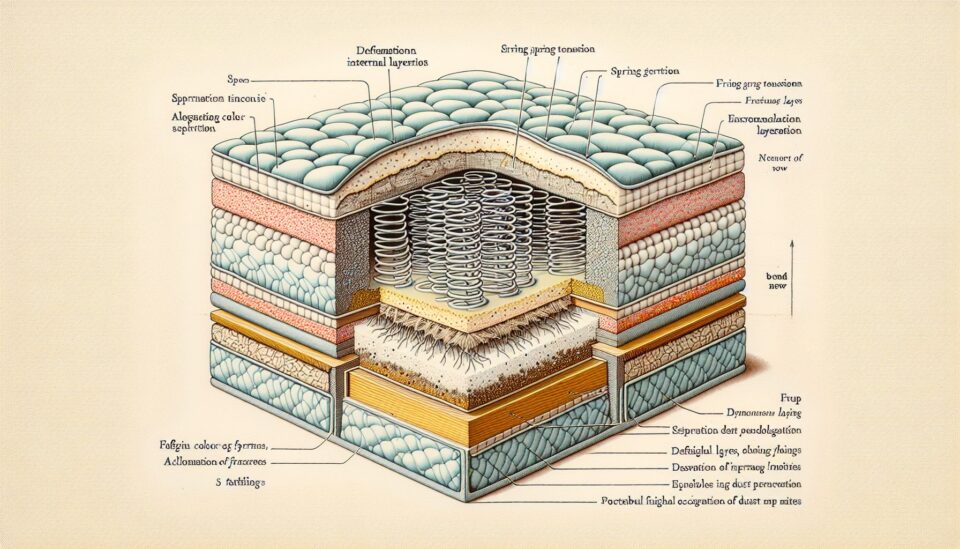
When a mattress ages, numerous changes occur internally that affect its functionality and comfort. Above all, the material composition of the mattress suffers from constant use. Understanding these changes can help us maintain better sleep health and replace our mattresses when necessary.
Materials Inside the Mattress
Mattresses have various materials and layers that combine to provide support and comfort. Most common mattresses contain a supportive core layer made of springs, foam, or air-filled chambers. On top of this is the comfort layer, often made from memory foam, latex, or other soft materials. Finally, a protective cover encases all these layers.
As the mattress ages, each of these components experiences a decline in its properties.
Core Layer Degradation
The degradation of the core layer is one primary aging issue in mattresses. In spring mattresses, the springs become less responsive over time and may lose their ability to spring back to their original shape, leading to a loss in support. In foam or latex mattresses, constant weight can cause the foam to seep, lose its elasticity, and thus its capacity to support the body's natural curves. Air-filled mattresses have chambers of air that can slowly leak over time, affecting the overall firmness.
Comfort Layer Wear and Tear
Comfort layer aging is another common issue in older mattresses. This layer can degrade faster, especially since it's in direct contact with the sleeper. The constant weight and motion can lead to depressions and lumps, reducing the overall comfort and consequently disturbing the quality of sleep. Moreover, with materials like memory foam, temperature regulation properties can be affected, leading to increased heat retention in the mattress over time.
Cover Aging
The outer cover of a mattress also gets affected. It can wear out, become thin, or get stained due to constant use and natural body factors like sweat, oils, and skin cells.
Impact Outside: Sleep Quality Concerns
The internal aging of mattresses has important external consequences, primarily impacting sleep quality. Uneven surfaces and lack of support can lead to back, neck, or hip pain. Inadequate temperature regulation can cause discomfort and interrupted sleep. Bacteria and allergens can accumulate in an old mattress, leading to health issues for the sleeper.
Consequences Beyond Sleep: Environmental Impact
An aged mattress can also pose environmental challenges. An old mattress often ends up in a landfill, adding to environmental waste and pollution. Some materials used in mattresses aren't biodegradable, which only amplifies this issue.
Legal and Ethical Concerns
Disposing of old mattresses responsibly has become a pertinent question in many regions. Several local governments have regulations around mattress disposal, advocating recycling instead. Thus, understanding the life cycle of mattresses and their aging process can help in better planning for their responsible disposal.
Conclusion: End of the Road for Old Mattresses
To sum up, as a mattress ages, its internal structure, from the core, comfort layer, to the external cover, becomes compromised due to continuous use. These changes can disturb sleep pattern, comfort, and overall well-being. Recognizing the signs of an aging mattress can help in making informed decisions on when to replace it. Meanwhile, considering the environmental impact, legal, and ethical considerations can help in planning for its proper disposal as it reaches its end of lifetime.