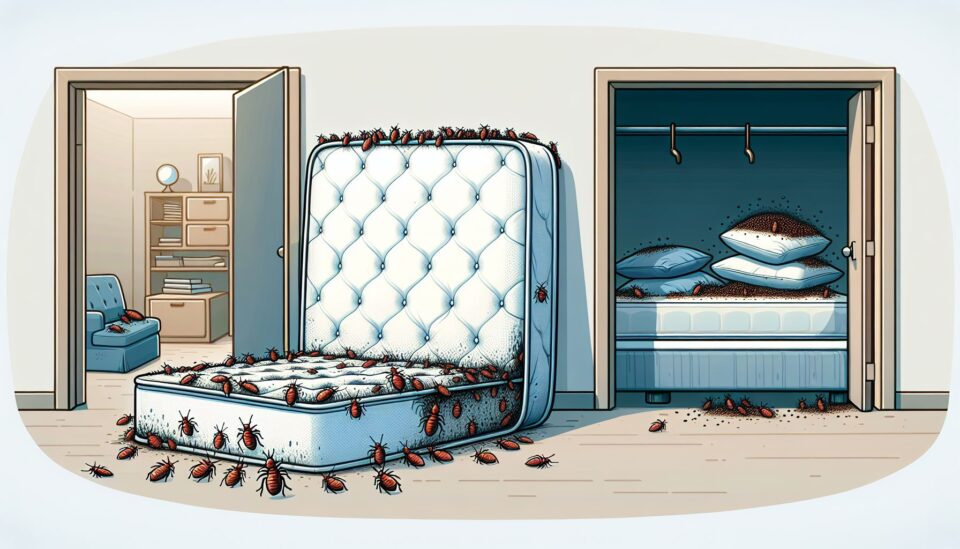
Bed bugs are a widespread household issue around the world. Their resilience and small size make them a pest that is difficult to eradicate. One common misconception is the belief that replacing a mattress will resolve a bed bug infestation. Unfortunately, this is far from the truth. This article will explain why such an approach fails and what complexities surround bed bug behavior, making complete eradication a challenging task.
Understanding Bed Bugs
Bed bugs are tiny, oval-shaped insects that feed on the blood of humans and other animals. They are nocturnal creatures, meaning they are most active at night. Bed bugs do not live on their hosts like lice or ticks. Instead, they feed on their host and retreat to their hiding areas. This behavior helps them avoid detection and contributes to their survival.
Why Replacing a Mattress Fails?
Bed bug infestations do not limit themselves to the mattress. They can be found anywhere around a sleeping area. They often hide in box springs, bed frames, headboards, nightstands, or even in nearby furniture, cracks in the wall or carpet. Simply purchasing a new mattress does not deal with the bugs that have taken refuge in these areas.
Another factor that contributes to the failure of this approach is how quickly bed bugs breed. A single female bed bug can lay hundreds of eggs in her lifetime, meaning a few overlooked bugs can rapidly reinfest a new mattress. They reproduce and mature quickly under suitable conditions making it easy to re-establish a population.
Misconceptions and Errors
The belief that bed bugs only infest dirty or cluttered homes is incorrect. Cleanliness is not a deterrent for these pests, and they can infest even the cleanest of homes given an opportunity. Since they feed on blood, their primary requirement is a host, not dirt or clutter. Also, they can move quickly across walls, ceilings, and floors, aiding their spread throughout a home.
Bed Bug Control
A comprehensive approach must be adopted to effectively tackle a bed bug infestation. Merely discarding a mattress will not address the problem entirely. Professional pest control services generally use a combination of chemical and non-chemical treatments for bed bug control. This includes heat treatments, cold treatments, steaming, and pesticides.
It is also crucial to properly dispose of the infested mattress to avoid contributing to the spread of bed bugs. Wrapping the mattress in plastic before discarding can prevent bugs from escaping and affecting other areas or properties.
The Specifics of Bed Bug Problems in Urban Homes
In an urban environment like a city or region with dense housing, the issue of bed bugs can be more prevalent due to the close proximity of residences. This closeness allows bed bugs to spread from one home to another, especially in apartments or shared housing facilities. Additionally, the heavy influx and movement of people can also contribute to their spread.
Conclusion
Understanding the biology and behavior of bed bugs is essential to effectively managing an infestation. The notion that replacing a mattress can solve the issue is regrettably a common misunderstanding. Bed bugs are adaptive and prolific breeders, making their complete eradication challenging. A comprehensive and professional approach is necessitated to deal with these pests effectively. Being educated about bed bugs can help residents to handle a bed bug infestation more effectively and prevent their spread.