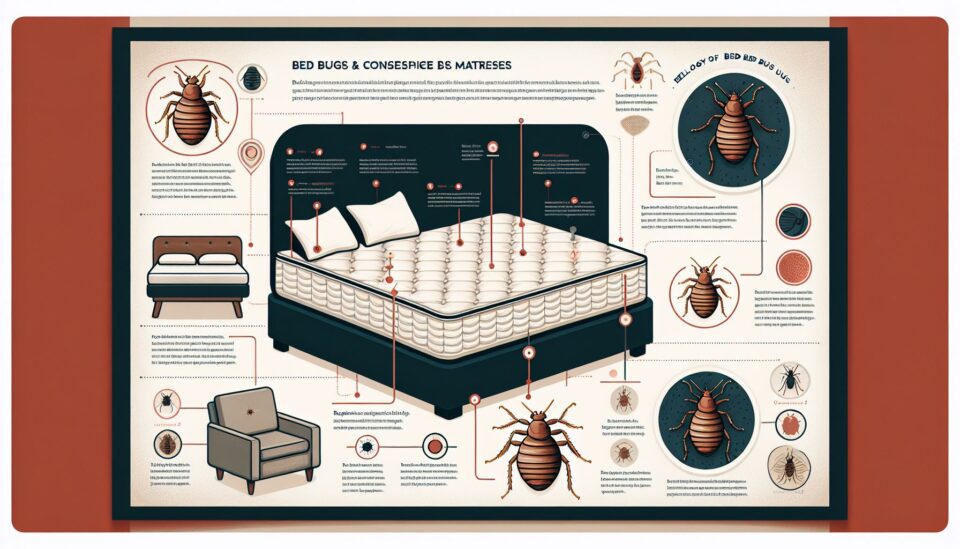
Bed bugs have a well-known association with mattresses. These small, blood-feeding pests often inhabit our sleeping areas due to their attraction to warm-blooded hosts who rest for long periods. But how exactly are bed bugs and mattresses connected, and are there misconceptions about this association that need rectification? Let's delve in to separate fact from fiction.
The Relationship between Bed Bugs and Mattresses
Bed bugs are nocturnal, crawling out of their hiding places at night to feed on human blood. The mattress provides these insects with easy access to their food source: humans who stay stationary while sleeping. Bed bugs are small in size, and their flat bodies allow them to wedge into the tiny seams and crevices of a mattress.
Typically, bed bugs will hide near their food source. They gravitate towards the dark, narrow spaces in and around the mattress and box spring, such as seams, tufts, and under tags. It is usual to find their shed skins, fecal spots, and tiny egg shells in these areas. Mattress infestations can commonly occur in urban settings with dense housing, such as apartment buildings or hostels.
Challenging the Misconception: Bed bugs are not Confined to Mattresses
The mattress is not the only place you will find bed bugs. Contrary to popular belief, these pests can infest other areas of the bedroom and the house. You could find them in cracks and crevices in furniture, behind baseboards, under carpets, in electronic appliances, and even behind wallpaper or paintings.
The association of bed bugs purely with mattresses is a myth. Their ability to traverse other areas can often make them a persistent pest problem, subtly creeping from room to room, causing infestations to recur even after treatment.
Bed Bugs, Mattresses, and Geography
The prevalence of bed bugs in mattresses can depend to a certain extent on geographical and environmental factors. In colder climates, the heating of indoor spaces can make mattresses attractive to bed bugs, but we also see them thrive in temperate regions.
Hotels, motels, and transient accommodations are more prone to bed bugs due to the high occupant turnover rate. It is often a misconception that bed bug infestations are tied to cleanliness, but these pests can hitch a ride on luggage, pets, or clothing, highlighting the absence of geographical immunity to infestation.
The Persistence of Bed Bugs: A Common Misunderstanding
A regular misunderstanding is that a one-time treatment can completely eradicate bed bugs. Bed bugs are resilient pests that can survive under adverse conditions. They can lay dormant for months without feeding and still survive. This survival capability makes them challenging to control, leading to recurring infestations.
Moreover, their small size and nocturnal behavior can make detecting their presence difficult. DIY treatments, such as using household insecticides, often have limited success, as bed bugs can evade these measures by moving away from treated areas.
Regulations and Constraints
Efforts to manage bed bugs follow regulations in most regions due to the health risks they pose. Public health agencies recommend professional pest control services for effective management. However, it's critical to remember that while the illegal use of pesticides is harmful, no regulation can completely prevent the spread of these pests, stipulating the need for awareness and early detection.
The Wrap-up
In brief, bed bugs and mattresses have a definite relationship, but it's not a complete picture of a bed bug infestation. These pests can inhabit various areas within the home and persist beyond simple treatment measures. Knowledge, vigilance, and professional management techniques can help in effectively addressing bed bug infestations.