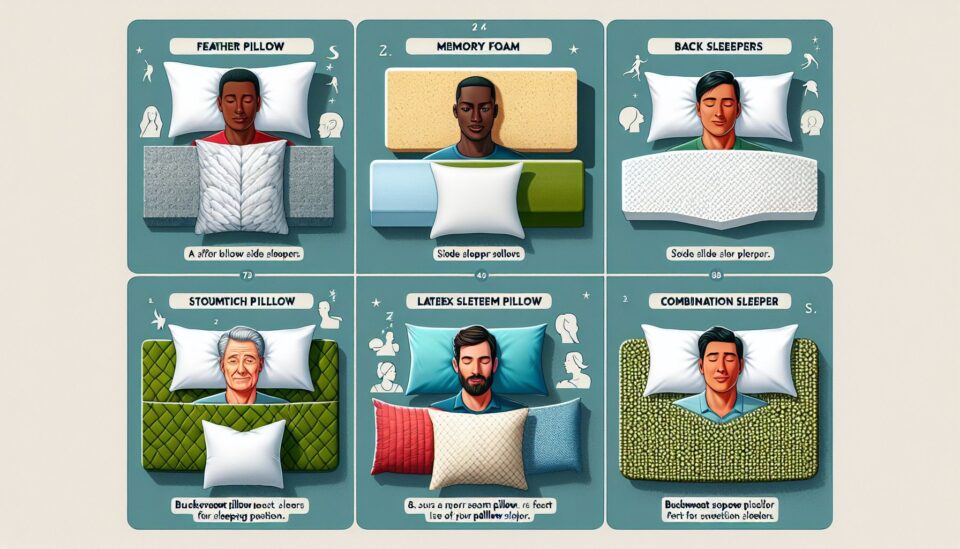
Pillows play a significant part in achieving a restful night's sleep. Two key factors in selecting a pillow are the individual's preferred sleep position and the pillow's material. Here, we will elaborate on these factors and their impact on choice of pillows.
Impact of Sleep Position
The selected sleep position has a significant influence on the pillow type needed. The primary aim is to maintain a neutral alignment of the neck.
Side Sleepers
People who predominantly sleep on their side usually require firm, thicker pillows. These pillows fill the gap between the shoulder and neck, ensuring the neck does not slant either upward or downward, which can lead to discomfort and poor sleep quality.
Back Sleepers
Back sleepers generally need a thinner, less firm pillow. This helps to prevent the head from being thrust too far forward, straining the neck. Some back sleepers prefer pillows that have an additional loft in the bottom third to offer extra neck support.
Stomach Sleepers
Stomach sleepers often find comfort with the thinnest pillows. In some cases, it could be more comfortable to sleep without a pillow for the head but use a thin one under the stomach to prevent lower back pain.
Relaxing with the Right Material
The material inside a pillow significantly impacts its firmness, support, durability, temperature control, and allergy potential.
Memory Foam
Memory foam contour to the shape of your head and neck, which can help maintain spinal alignment. However, they can retain heat and may not be as suitable for those who sleep hot.
Feather Pillows
Feather pillows are typically soft and moldable, which some sleepers may find comfortable. They tend to be more durable, but lack the same level of support as other types and may cause allergies.
Latex Pillows
Latex pillows are known for their durability and firmness. They offer good neck and shoulder support and are resistant to dust mites and mold.
Down Pillows
Down pillows, made from the fluff under the feathers of ducks and geese, are incredibly soft and can be easily molded to fit your preferences. However, they offer little support and also have a potential for allergic reactions.
Polyester Pillows
Polyester fill is a common synthetic pillow fill that is less expensive and slightly less durable. It is relatively firm and supportive, but it may clump after prolonged use.
Conclusion
Pillow selection is vital for achieving a good night's sleep, and two main factors guide this choice: sleep position and pillow material. Understanding the pillow variations based on these factors will enable sleepers to make informed decisions. However, individual preferences around comfort, softness, and firmness are exceptionally varied, meaning there is no one-size-fits-all solution. The quest to find the dream pillow involves a fair amount of personal trial and error.