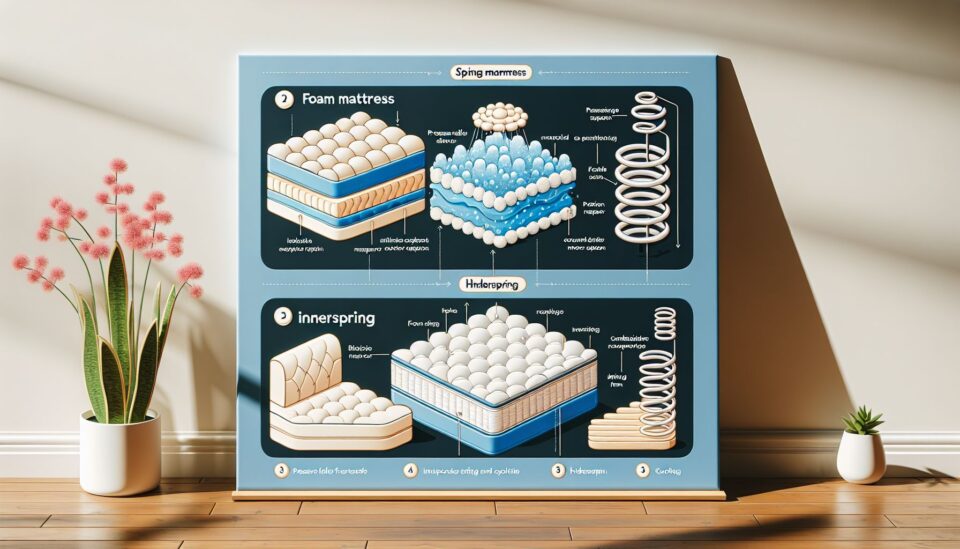
Buying a mattress involves a series of choices. The numerous options available can feel overwhelming. This guide will simplify these options by explaining the differences between the main mattress types: foam, innerspring, and hybrid mattresses. Each mattress type offers unique benefits and drawbacks which we will discuss below.
Foam Mattresses
Foam mattresses are mainly made from layers of foam materials. They are popular for their body contouring ability and minimal noise when moving. Two main types of foam mattresses are available on the market: memory foam and polyurethane foam.
Memory Foam Mattresses
Memory foam mattresses use a body heat-responsive foam that adjusts to the shape of your body. This characteristic provides superior comfort and support, notably for people with painful pressure points. However, memory foam tends to trap heat and may sleep hot. Memory foam mattresses also offer limited responsiveness and may make movements on the bed more challenging.
Polyurethane Foam Mattresses
Compared to memory foam, Polyurethane foam mattresses offer more firmness. This provides a balance of comfort and support. Polyurethane foam is more breathable and sleeps cooler than memory foam. These mattresses also tend to be cheaper. The downside is that Polyurethane foam mattresses may lack the longevity of their memory foam counterparts.
Innerspring Mattresses
Innerspring mattresses use metal springs for support. These springs can be interconnected, pocketed, or structured differently to provide varying degrees of firmness and stability.
Innerspring mattresses have a reputation for durability and sturdiness due to their metal spring core. The open structure of the springs allows excellent airflow, making these mattresses sleep cooler than foam mattresses.
However, innerspring mattresses have a tendency to sag over time. They are also more likely to produce noise when you move. Additionally, innerspring mattresses can create pressure points due to the spring structure.
Hybrid Mattresses
Hybrid mattresses merge the features of foam and innerspring mattresses. They typically feature a top layer of memory or polyurethane foam for comfort and a layer of pocketed coils for support.
Hybrid mattresses provide a balanced feel that combines the best of both foam and spring mattresses. They offer excellent contouring and pressure relief from the foam layer and robust support from the innerspring layer. Hybrid mattresses also tend to sleep cooler than all-foam mattresses due to air circulation through the coil layer.
However, hybrid mattresses are usually more expensive than other types. They also tend to be heavier because of their construction, making them difficult to move.
Conclusion
In conclusion, foam, innerspring, and hybrid mattresses each have their strengths and shortcomings. Memory foam mattresses are remarkable for their ability to contour the body and relieve pressure points. Polyurethane foam mattresses offer a cooler sleep with balanced support. Innerspring mattresses provide a firm, responsive surface with ample air circulation. Lastly, hybrid mattresses combine the advantages of foam and spring mattresses for a balanced sleep experience.
The choice between these mattress types will ultimately depend on personal preferences for factors like firmness, cooling, price, and support. It is crucial to reflect on these factors and to test different mattresses when possible to find the right fit for your sleep needs.